Bolivia as a strategic ally of the United States
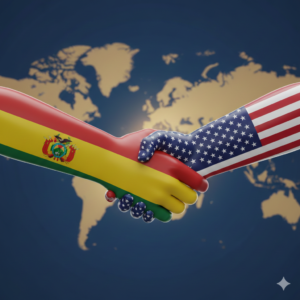
In an international context marked by the rapid reconfiguration of alliances, Donald Trump’s return to the White House in 2025 represents a turning point in global geopolitical dynamics. His “America First” approach, centered on the priority defense of U.S. interests and the containment of rival powers, could present a strategic opportunity for Bolivia at a time of significant economic and political challenges.
Trump’s foreign policy is characterized by aggressive pragmatism and a transactional logic, prioritizing bilateral agreements that generate direct benefits for the United States, making intensive use of tariffs, economic sanctions, and, in specific cases, selective military actions. In Latin America, his agenda focuses on reducing irregular migration, combating drug trafficking, and strengthening ties with strategic allies, while maintaining a confrontational stance toward regimes considered adversaries.
In this framework, Washington has favored strategic allies with financial support and direct cooperation. Recent examples include the USD 20 billion financial rescue for Argentina, structured as a currency swap to stabilize the economy of President Javier Milei; USD 500 million in economic and military assistance to El Salvador to support President Nayib Bukele’s security strategy; and a USD 300 million package for Ecuador aimed at strengthening the fight against drug trafficking and promoting commercial cooperation under the administration of Daniel Noboa.
In contrast, nations perceived as adversaries have faced punitive measures. For instance, Trump announced the end of aid to Colombia, canceling USD 400 million and imposing a 25% tariff on its exports; revived covert operations against Venezuela and deployed a naval fleet in the Caribbean; re-designated Cuba as a state sponsor of terrorism, imposing sanctions that restrict remittances and travel; and applied USD 100 million in cuts to aid for Nicaragua, alongside new financial restrictions due to its alliance with the Venezuelan regime.
In this scenario, Bolivia’s position takes on special relevance. A pragmatic approach to U.S. foreign policy could yield significant positive effects, and the recent restoration of diplomatic relations at the ambassadorial level, the removal of the visa requirement for U.S. citizens, and the authorization for Starlink to operate in the country reflect growing interest from Washington in incorporating Bolivia as a strategic ally.
This approach could enhance Bolivia’s access to financing from multilateral institutions such as the IMF, the World Bank, and the IDB; attract investments in key sectors like lithium, energy, and technology; expand commercial opportunities; and promote cooperation in areas like security, education, health, and sustainability. However, this process requires caution to preserve national sovereignty and autonomy, avoiding commitments that would limit the country’s margin for action. It is essential to maintain a diversified foreign policy, consolidating ties with China, the European Union, India, and other emerging powers, while strengthening national institutions to respond with resilience to both internal and external challenges.
Author: Walter Marañon Quiñones
You can also read this article in:




Share this article: