How to reform the hydrocarbon subsidy in Bolivia
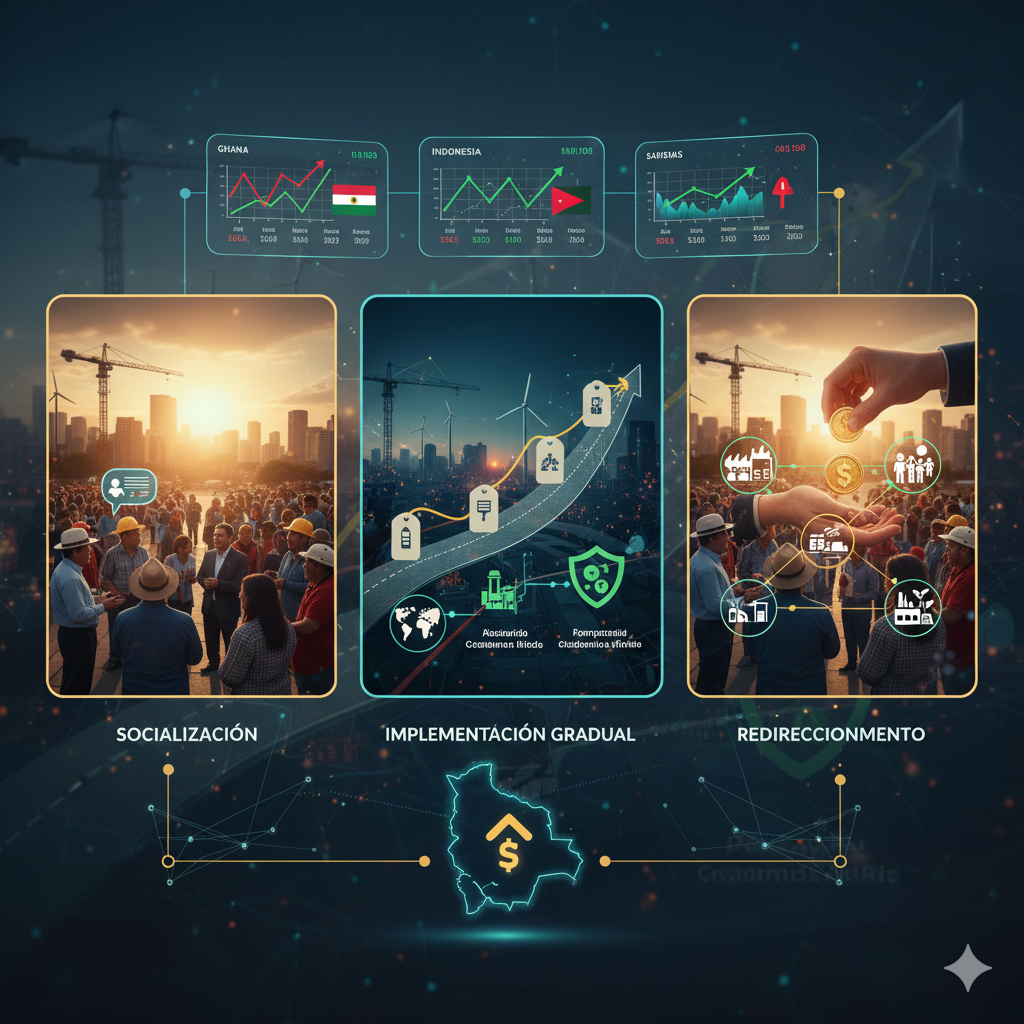
The hydrocarbon subsidy in Bolivia has been a growing topic of debate due to its significant impact on the country’s finances, putting pressure on international reserves and affecting the overall economy. It is crucial to address the implementation of the elimination of this subsidy carefully to avoid negative effects that could worsen the situation, making the cure worse than the disease. To this end, this article examines international experiences in the elimination of hydrocarbon subsidies.
Reform in Ghana
The elimination of hydrocarbon subsidies in Ghana began in 2001 when the country tried to align fuel prices with international market rates. While the main objective was to reduce the fiscal burden, the implementation of these reforms was inconsistent due to the social and political pressure they generated, being interrupted by executive interventions, especially around election periods. This created a cycle of adjustments and setbacks in the subsidy policy, which led to negative effects on the sustainability of the reforms.
Economically, the lack of continuity in the elimination of subsidies increased government debt to the energy sector. Although a new price deregulation was implemented in 2015, bringing greater stability by allowing competition in the market, social tensions due to rising living costs and prices sparked new social protests.
Reform in Indonesia
Indonesia began reducing fuel subsidies in 2005, which allowed the government to free up fiscal resources and avoid market price distortions. The main objective was to reduce the fiscal deficit and improve energy efficiency, due to increasing fiscal pressure and dependency on imports. This allowed the government to allocate the subsidy resources to priority sectors such as education and social programs.
Economically, the elimination of subsidies saved USD 4.5 billion in 2005 and USD 10 billion in 2006, which helped stabilize public finances. However, the increase in fuel prices generated social tensions and protests due to the rise in the cost of living.
Reform in Jordan
In 2012, Jordan removed subsidies for gasoline, diesel, liquefied petroleum gas, and kerosene, driven by a fiscal crisis and a rise in international oil prices. This adjustment aimed to reduce public spending and stabilize the economy, as the country was heavily dependent on energy imports.
The economic consequences included a reduction in fiscal pressures, but also a significant increase in the cost of living. To mitigate the impact on the most vulnerable sectors, the government introduced various economic measures and cash transfers to these groups.
Lessons Learned and Their Application to Bolivia
In all three countries, the elimination of hydrocarbon subsidies relieved public finances and promoted greater economic efficiency. However, the reforms generated social tensions due to rising fuel prices and their impact on the cost of living, demonstrating that the success of reforms depends on gradual implementation, consultation with key stakeholders, and protection of the most vulnerable sectors.
Thus, to implement a gradual reform of hydrocarbon subsidies in Bolivia, a phased approach should be followed:
- Socialization Phase: There must be a socialization phase in which citizens and affected sectors are informed about the reasons and benefits of the reform. This stage should include public consultations and workshops with representatives from civil society, the private sector, and social organizations to ensure that concerns are heard and addressed.
- Implementation Phase: The reform should be implemented gradually, starting with moderate and progressive adjustments to the subsidies to avoid an abrupt impact on the cost of living. In this phase, the government should ensure the continuity of subsidies for strategic sectors of the productive matrix, such as agriculture, industry, and transportation, to prevent adverse effects on the economy and employment.
- Redirection Phase: It is essential to redirect the economic resources freed up toward mitigation measures and incentives that benefit citizens, social sectors, and the private sector. This could include targeted subsidies for low-income households, incentives for the adoption of more efficient technologies, and support for small and medium-sized businesses affected by rising prices.
While these phases are general, each one warrants deeper exploration. Coordination between the government, the business sector, social sectors, and civil society is crucial for the successful implementation of the reform. Clear communication and collaboration mechanisms must be established to ensure that all actors are aligned toward the same goal and that compensation measures are effective. Furthermore, it is important to continuously monitor the impact of the reform and adjust policies as needed to mitigate any unexpected negative effects.
Author: Walter Marañon Quiñones