Spontaneous Industrialization
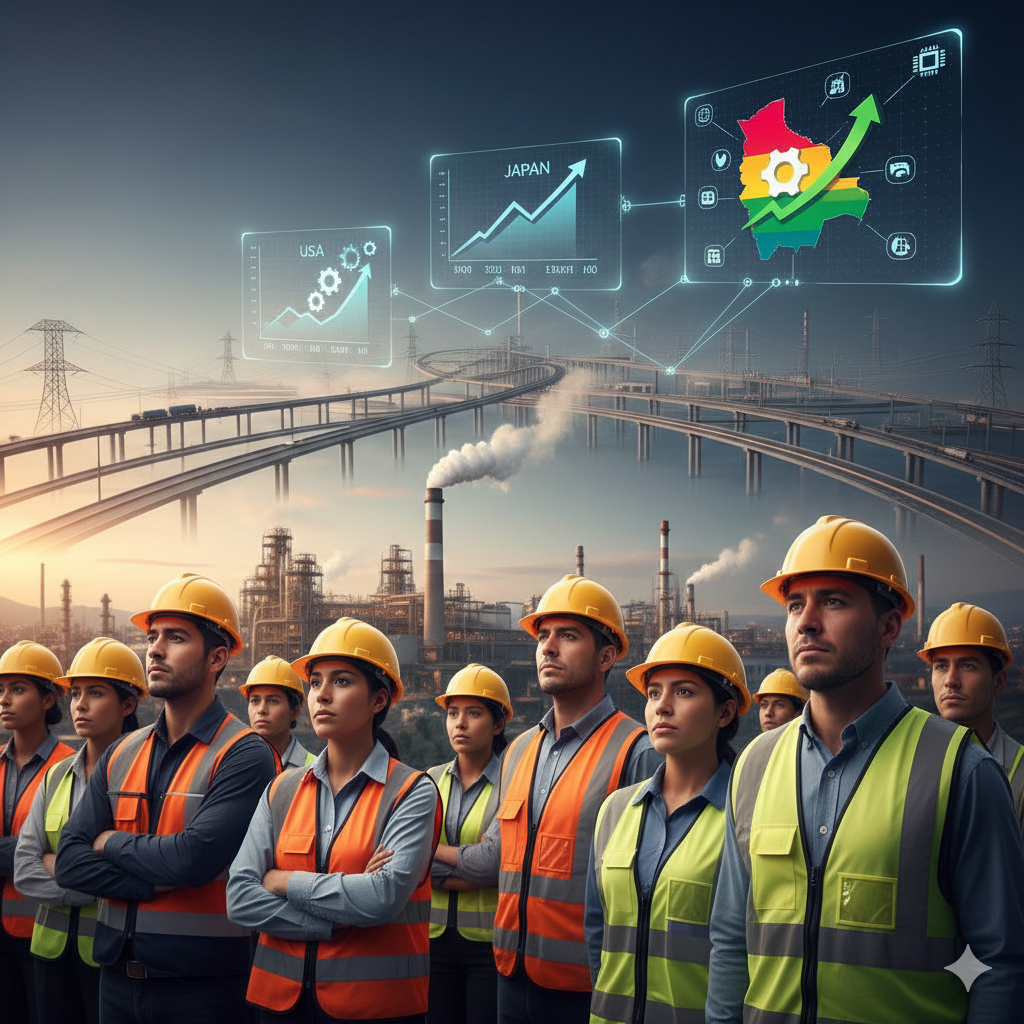
Amid the electoral process, proposals have emerged seeking to replace the current industrialization model with the dogmatic application of approaches that exclude public participation. However, these positions underestimate the complexity, time, and resources required to develop a competitive industrial base in emerging countries such as Bolivia. They also overlook the fact that the world’s most advanced economies did not achieve their level of industrialization spontaneously or solely through market forces, but rather through strategic and sustained state participation.
Industrialization itself provides multiple key benefits for economic development. Academic evidence indicates that it promotes productivity growth, the creation of quality jobs, innovation, and export diversification, thereby strengthening the trade balance. Moreover, it is a central driver of Gross Domestic Product growth and poverty reduction, as it generates higher incomes and greater training opportunities.
International experience reinforces the active role of the state in industrialization. In the United States, during the 19th century, the government implemented successive tariff laws that raised duties to as much as 50% in order to protect emerging industries such as textiles and steel. These measures not only shielded domestic production from external competition, but also encouraged early capital investment, consolidating a solid industrial base through active public policies.
Japan, following the Meiji Restoration (1868), adopted a comprehensive development approach under the motto “enrich the country and strengthen the army.” This strategy included the construction of strategic infrastructure (railways, telegraphs, and state-owned factories), the promotion of technological missions to the West, and the creation of zaibatsu—industrial conglomerates that initially received state support and were later dissolved after World War II to become the keiretsu.
South Korea, beginning in 1962, directed its industrialization process through five-year plans that channeled more than one-third of national investment into key sectors such as mining and manufacturing. The chaebol—large conglomerates such as Samsung and Hyundai—emerged from this public–private partnership model, benefiting from access to concessional credit, subsidies, and preferential export conditions, which enabled a rapid leap in industrial development.
In the Bolivian case, industrialization is already underway, and an interruption based on the dogmatic application of external models would represent a setback to the progress achieved, as well as a prolongation of dependence on international commodity price cycles. Therefore, the continuity, deepening, and strengthening of the current industrialization model emerges as an indispensable condition for consolidating an economy that generates added value, quality employment, and greater economic autonomy for the country.
Author: Walter Marañon Quiñones
You can also read this article in:



Share this article: