I Believe You
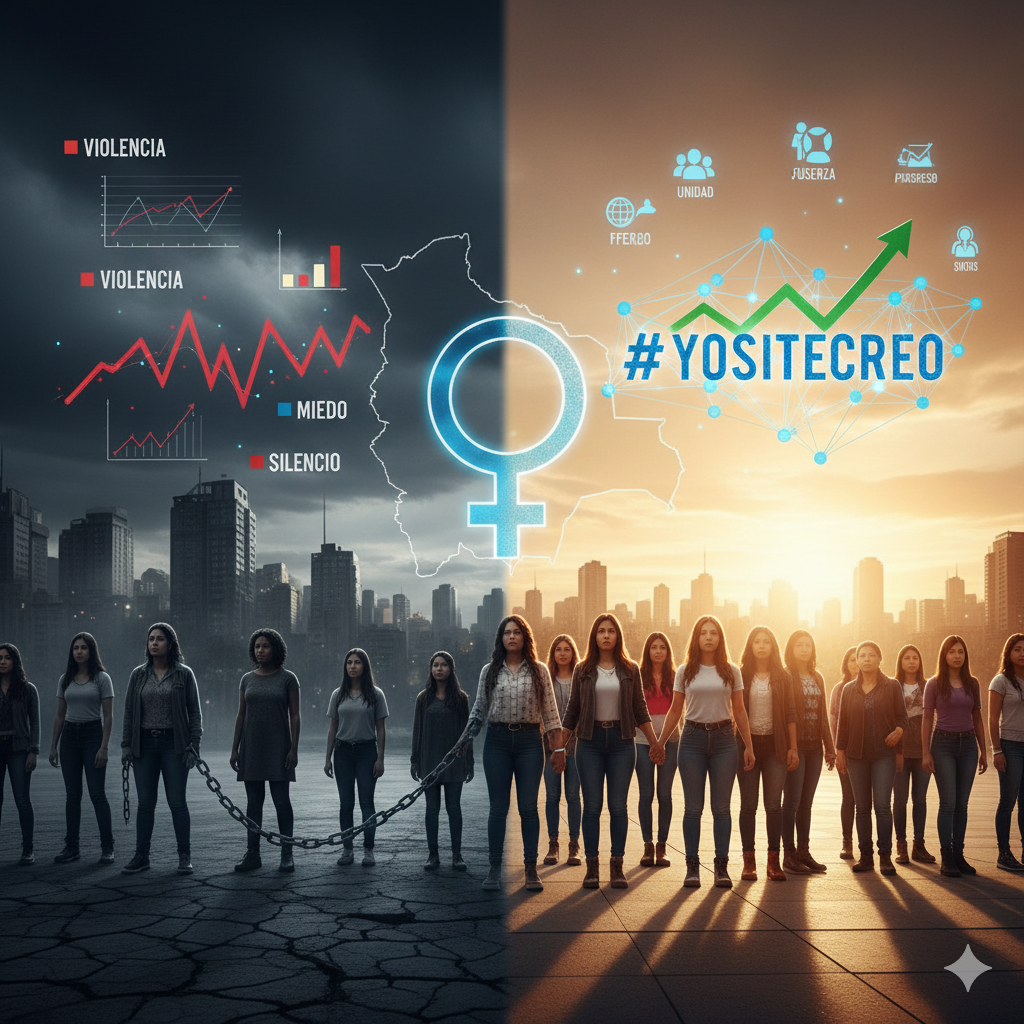
March 8 marked the celebration of International Women’s Day. On this date, we remember the long-standing struggle of women for freedom and equality, which, although present since the very beginning of society, gained enormous momentum in the 19th century, when brave women raised their voices demanding equality in the social, political, economic, civil, and religious spheres. That demand has continued to this day, and thanks to the constant struggle of the collective, significant progress has been achieved in all of these areas.
However, this day also serves as a reminder that the fight is far from over. One of the main problems women face today is physical and sexual violence, which globally affects one in three women (Human Development Report, 2015). At the national level, 39% of women report having suffered psychological violence, 20.7% physical violence, and 15.3% sexual violence (INE, 2017). The latter has seen the greatest increase in recent years (364%), rising from 762 victims in 2006 to 2,773 in 2016 (INE).
A clear indication that the struggle must continue is what occurred on February 27, when, through a university confessions page (El Confesionario UCB), various testimonies were made public by women who claimed to have been raped and who publicly identified their aggressors. While several names were mentioned, one of them appeared repeatedly and, in less than two weeks, accumulated a total of 150 accusations.
There was no shortage of the typical individuals who, with complete ignorance, demanded evidence from the victims, ignoring the fact that rape is one of the most difficult crimes to prosecute. Contrary to popular belief, this type of violence generally does not leave visible injuries or physical evidence; the use of weapons is uncommon, it does not usually occur in public places, and it does not leave a victim eager to report what happened to authorities or even to loved ones.
As a result, victims in the vast majority of cases decide not to report their aggressor for different reasons, including shame, fear of being judged, confusion, the high economic cost of filing a complaint, the lengthy and uncomfortable nature of judicial proceedings, or simply the belief that their word will lack credibility (especially since sexual aggressors often hold positions of power).
What is needed in these situations is a judicial system and a society that treat both the victim and the accused seriously and impartially. Taking into account that between 2% and 8% of rape accusations are false (University of Massachusetts) and that the presumption of innocence is a fundamental principle of law, it is still possible—and necessary—to investigate the testimony of a potential victim by subjecting it to a credibility assessment as evidence of a crime. In the case of the accusations made through the “confessional” page, a modus operandi typical of a sexual predator can be identified in the main accused, and it should be added that this individual had already been reported previously.
In this way, the “confessional” incident holds great relevance, as it is yet another episode in the ongoing struggle of Bolivian women for equality and freedom. It has become a powerful tool that empowers abused women, giving them a voice and credibility, and creating a domino effect that encourages reports of other forms of violence against women. Thus, #IBelieveYou stands as an expression of unity, strength, and courage among women.
Author: Walter Marañon Quiñones