Maritime Claim and the Economy
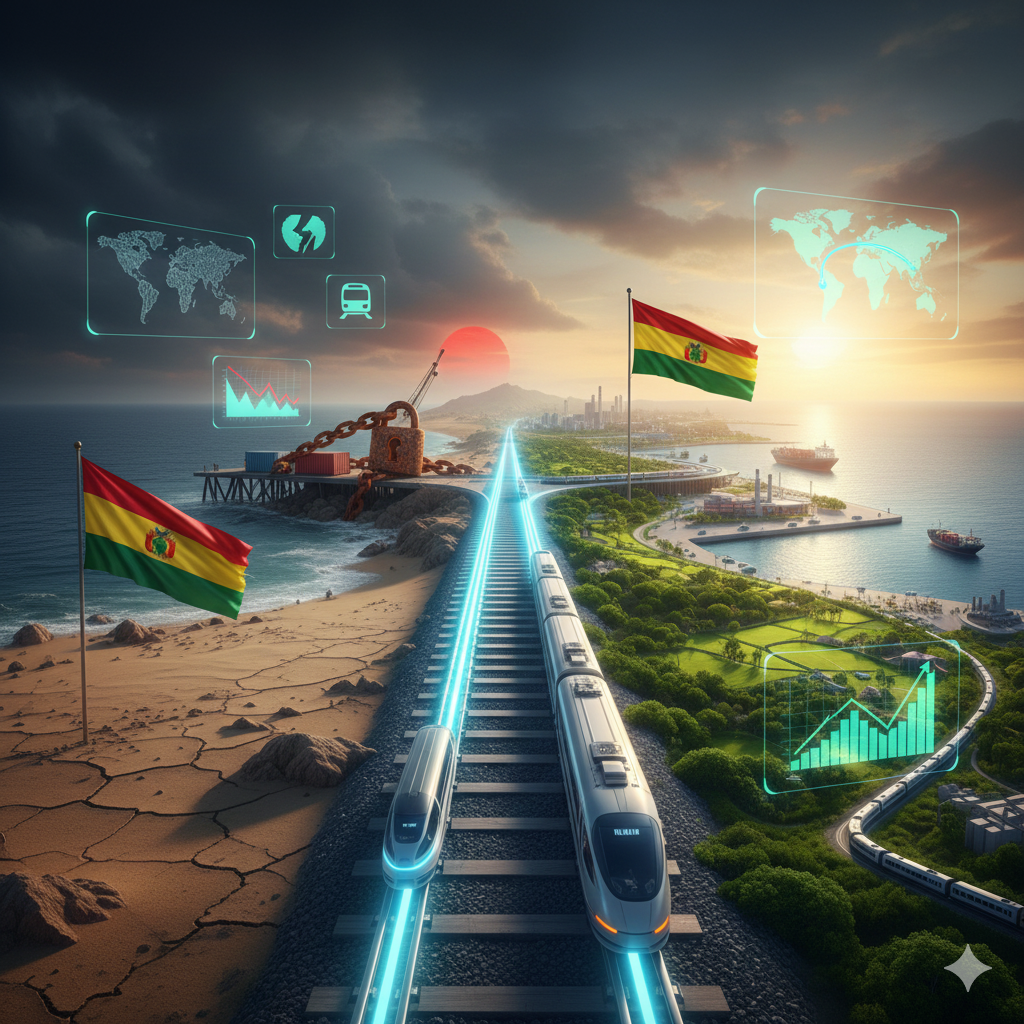
Since school days, we are taught that the territories taken by Chile belong to us and that it is our duty to recover them. Our patriotic spirit is revived every March, and we all eagerly await the future verdict from the Hague Tribunal. However, the maritime claim is quite complicated, involving various political, economic, and social interests. As an economics student, I would like to provide an economic perspective on this topic.
Recall that in 1879, after Bolivia increased the tax on the exploitation and export of guano, Chile invaded our territory under the pretext that the treaty—which prohibited raising this tax—was violated. Following heroic actions by Peruvians and Bolivians during the conflict, Bolivia ultimately lost territory.
The future verdict of the Hague Tribunal will not, in any way, compel Chile to grant Bolivia sovereign access to the sea, as such an action would be a severe blow to the economy and progress of northern Chile. Likewise, the option of using the port of Ilo (in Peru), while seemingly promising, presents the following challenges: the Peruvian government only offers the “land,” on which Bolivia could construct a maritime port (estimated cost between USD 400–500 million), in addition to ensuring road or rail access for Bolivia’s imports and exports.
Peru does not offer the port construction itself because that would create unnecessary competition with its main port (Callao), so it will not incur this expense. For Bolivia, building infrastructure at a high cost on “foreign” territory is not very advisable, since at any moment the “homeowner” could demand its evacuation. Additionally, Bolivia would have to increase the cost of training port operators or hire specialized Peruvian labor.
However, while no advantageous options currently exist for our country, a light of hope appears on the horizon: the construction of the Bioceanic Railway. This project mainly involves four countries (Brazil, Paraguay, Bolivia, and Peru) and aims to “connect” the Pacific and Atlantic Oceans. If this project manages to cover at least 80% of Bolivia’s import and export transport, Chile would have no choice but to modify its commercial policy with Bolivia, which could result in better opportunities for Bolivia regarding maritime access.
Author: Walter Marañon Quiñones
You can also read this article in:

Share this article: